London to Bristol: The Hidden Bridge Between Soul II Soul and Massive Attack

Soul II Soul: Shaping London’s Dance Scene and Sound
Soul II Soul was more than just a band—they were a cultural movement that redefined the sound of late-’80s and early-’90s London. Led by Jazzie B, the collective blended soul, reggae, funk, and hip-hop into a smooth, signature sound that became synonymous with the capital’s dance scene. Their debut album, Club Classics Vol. One (1989), was a groundbreaking fusion of upbeat, danceable grooves and laid-back, introspective vibes, perfectly capturing the era’s multicultural energy.
Beyond their musical innovations, Soul II Soul transformed the live performance experience. Their vibrant sound system parties at venues like The Africa Centre became iconic, fostering a sense of community and inclusivity. These events set the stage for the UK dance scene’s growth and helped cement British music’s global influence. Through their distinctive mix of sound, Soul II Soul became key players in shaping London’s dance culture and paved the way for future genres like trip-hop.
A lesser-known track from that album, “Feeling Free (Live Rap)”, featured members of what would soon become Massive Attack. The collaboration, listed in the album’s credits, represents one of the earliest points of connection between two of Britain’s most influential music scenes [1]
While reading the credits on the back of my Soul II Soul CD, I was shocked to see Massive Attack listed, which inspired me to investigate further and write this article.


The Wild Bunch – Bristol’s Hidden Blueprint
Before Massive Attack crafted the brooding textures of Blue Lines, they were members of The Wild Bunch. This DJ and MC collective emerged in early-1980s Bristol, blending punk, dub, hip-hop, electro, and reggae in ways that anticipated the sound of trip-hop. Their parties at venues like The Dug Out were foundational to the Bristol underground.
Though The Wild Bunch only officially released one single—*“Machine Gun” / “Friends and Countrymen”* in 1987—their legacy lives on. Members like Grant “Daddy G” Marshall and Robert “3D” Del Naja would go on to form Massive Attack, while Tricky and even Portishead built on their experimental DNA [3].
Nellee Hooper’s departure for London and his work with Soul II Soul represents a crucial crossover point—where Bristol’s gritty fusion met London’s polished, soulful groove.


Nellee Hooper, a key figure in linking the Soul II Soul and Massive Attack universes
A founding member of The Wild Bunch, Hooper moved to London around 1986 and joined Jazzie B’s collective. He went on to co-produce Club Classics Vol. One, helping refine Soul II Soul’s smooth, stylish sound.
Later, Hooper returned to work with his former Bristol crew, co-producing Massive Attack’s Blue Lines. His fingerprints are all over both albums—spacious beats, textured samples, rich instrumentation. Hooper’s production style helped shape the sound of Soul II Soul and trip-hop alike [2][3].

For instance, producer Jazzie B highlighted their collaborative dynamic:
"Nellee was a really good translator, he could really explain well. The three of us, we had a good chemical reaction, talking with music instead of much language." Sound On Sound
This reflects the synergy between Nellee Hooper, Jazzie B, and their team during the production of Soul II Soul's groundbreaking tracks.
Hooper co-produced Massive Attack’s second album, Protection, and was instrumental in shaping its sound. Reflecting on the collaboration, composer Craig Armstrong, who also worked on Protection,
"The process of working with Massive Attack was very much the band, Nellee Hooper, and myself either talking about the album in Bristol or trying to record some of it in Olympic Studios in London." 15 Questions
This insight underscores Hooper's significant role in the album's development and his close collaboration with the band during that period.
Nellee Hooper – Top Production Highlights
Soul II Soul – Club Classics Vol. One (1989)
Includes “Keep on Movin’” and “Back to Life.” Defined the UK soul/dance sound and earned Grammy wins.
Soul II Soul – Volume IV: The Classic Singles 88–93 (1993)
Released as The New Decade, this best-of collection included new material like “Wish,” with Hooper helping to cement their legacy.
Sinéad O’Connor – I Do Not Want What I Haven’t Got (1990)
Produced “Nothing Compares 2 U,” a global hit and emotional powerhouse.
Björk – Debut (1993)
Breakout solo album featuring “Human Behaviour” and “Big Time Sensuality.” Hooper co-crafted her unique sonic identity.
Massive Attack – Protection (1994)
Trip hop landmark with the title track and “Karmacoma.” Won BRIT Award for Best Producer.
Howie B: From Soul II Soul’s Studio to Massive Attack’s Soundworld
Before he became known for his cinematic production on Massive Attack’s Mezzanine and his genre-bending work with Björk, Howie B (Howard Bernstein) got his start behind the boards at one of the most pivotal moments in UK music history. As an engineer on Soul II Soul’s 1989 debut, Club Classics Vol. One (released in the U.S. as Keep On Movin’), Howie B contributed to the sonic polish of a record that helped define the London soul/dub/dance fusion of the late ‘80s.
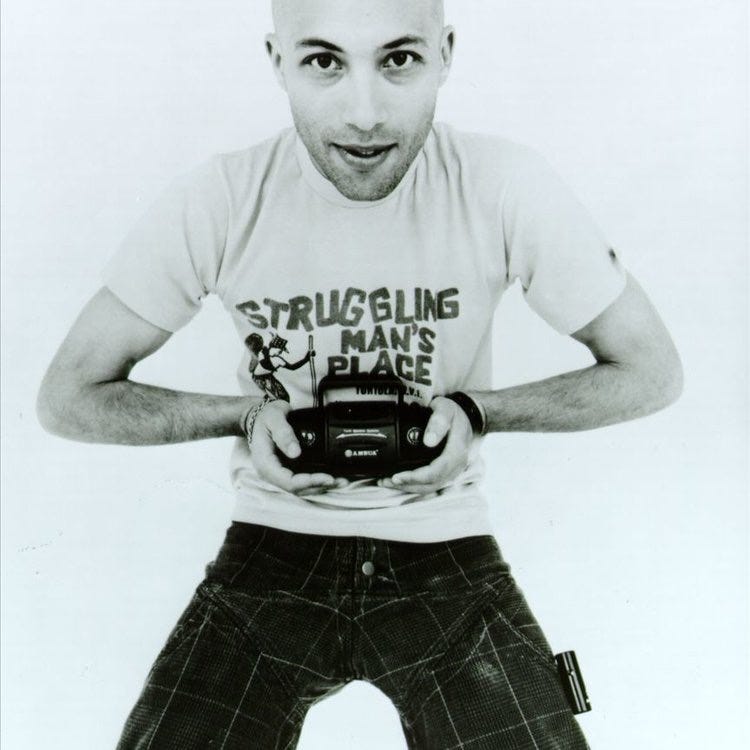
Working alongside Jazzie B and Nellee Hooper, Howie B’s role in shaping the smooth, bass-heavy sound of tracks like “Fairplay” put him at the intersection of two seismic musical movements: the sleek optimism of Soul II Soul and the murkier, more introspective trip-hop that would soon emerge from Bristol.
While his deeper collaboration with Massive Attack came nearly a decade later on Mezzanine (1998), where he served as a key engineer and sound designer, the groundwork had already been laid in those early sessions. The dub textures, open space, and soul-rooted rhythm of Soul II Soul’s debut would echo throughout Howie B’s later productions—connecting the uplifting flow of late-'80s London to the haunting introspection of late-'90s Bristol.
“We were mixing soul and dub with studio techniques that felt futuristic at the time. That early Soul II Soul sound definitely stayed with me.”
— Howie B, reflecting on his early studio work (interview via Red Bull Music Academy)
Howie B – Engineering & Production Highlights
Soul II Soul – Club Classics Vol. One (1989)
Engineer on tracks such as “Fairplay.” This early credit placed him at the heart of London’s genre-defining soul/dub/dance movement.
Discogs Release PageSoul II Soul – Vol. II - 1990 A New Decade (1990)
Engineer on creditsMassive Attack – Mezzanine (1998)
Producer, programmer, and engineer. Helped shape the dark, textural sound of this trip-hop landmark, known for its ambient layering and dub-influenced beats.
Wikipedia ArticleBjörk – Post (1995)
Co-producer. Collaborated with Björk to craft genre-bending, emotional soundscapes blending electronic, orchestral, and experimental styles.
Discogs Release PageU2 – Pop (1997)
Producer and sound designer. Introduced electronic and dance influences to U2’s most experimental album.
Sound on Sound ArticleTricky – Nearly God (1996)
Producer and collaborator. Contributed to Tricky’s shadowy, lo-fi trip-hop side project.
Wikipedia Article
Soul II Soul’s Influence on Trip-Hop
In Summary, Soul II Soul, led by Jazzie B and his work with Nellie Hooper, Howie B and Massive Attack as a whole laid critical groundwork for trip-hop to evolve and flourish. Their pioneering blend of soul, reggae, hip-hop, and dub—delivered with a smooth, stylish production aesthetic—helped reshape British black music in the late '80s. Their debut album Club Classics Vol. One (1989) introduced a sound that was rhythmically rich, emotionally resonant, and deeply groove-driven.
Key influences on trip-hop include:
Dub-style production: Soul II Soul’s emphasis on space, echo, and bass laid a sonic blueprint that trip-hop artists would expand upon.
Mood-driven soundscapes: Their mellow, introspective tone and use of minor key melodies paved the way for the downtempo, cinematic feel of trip-hop.
DIY sound system culture: Their approach to music as both a communal experience and a sonic experiment directly inspired Bristol's scene, especially The Wild Bunch (which became Massive Attack).
Shared personnel: Producer Nellee Hooper worked with both Soul II Soul and Massive Attack, bringing a continuity of sound and technique.
Cultural fusion: Soul II Soul’s pan-African, genre-blending ethos mirrored the multicultural, hybridized identity of trip-hop.
In essence, Soul II Soul didn’t just influence the sound of trip-hop—they created the cultural and sonic environment that helped make its emergence possible.
Sources
1. Soul II Soul – *Club Classics Vol. One*, liner notes (Virgin Records, 1989).
2. The Guardian. “From Wild Bunch to Massive Attack: The Roots of Trip-Hop.” Mark Hooper, 2009. [The Guardian](https://www.theguardian.com/music/2009/oct/11/massive-attack-trip-hop).
3. Reynolds, Simon. *Energy Flash: A Journey Through Rave Music and Dance Culture*. Picador, 1998.
4. Red Bull Music Academy. Jazzie B Lecture, 2013 – Transcript. [RBMA](https://daily.redbullmusicacademy.com/2013/03/jazzie-b-lecture)
Watch the full lecture here: ►
Soul II Soul - 'Special' #1 (feat. Horace Andy)
Unreleased Soul II Soul Track taken from the mixed compilation "Jazzie B presents Soul II Soul At The Africa Centre" featuring the mythical Horace Andy.