Kraftwerk, the pioneering German electronic band and their influence
The beginning, their influence and their current tour

Kraftwerk, the pioneering German electronic band, has profoundly influenced the trajectory of modern music. Their innovative use of synthesizers, drum machines, and early computer technology laid the groundwork for numerous genres, including synth rock, hip-hop, and techno.
How I discovered Kraftwerk
As an 80’s kid, I heard the band through the artists they influenced.
Growing up 75 miles east from NYC in Southampton, NY, I was lucky enough to access 98.7 KissFM as my older brother had the keen idea of extending the antenna wire from his am/fm receiver to our home tv antenna on the roof of our home.
KissFM is where I first heard artist like Afrika Bambaataa and Mantronix for the first time and it blew my mind.
Along with these new sounds being shared by DJ Red Alert, there was also the synth pop that also started dominating the airwaves.
New Order, Depeche Mode, The Cars, Gary Newman, M/A/R/R/S, Yaz, and The Art of Noise. There’s also the songs that dominated the disco charts like Giorgio Moroder’s synthesized disco track with Donna Summer. The Synthesizer was a major element on songs I love listening to both then and now.
In crafting “I Feel Love,” Moroder took direct inspiration from another German group, Kraftwerk, who pioneered the use of synthesizers, sequencers and computers in popular music. Kraftwerk’s “Trans-Europe Express” was a moderate commercial hit in 1977, but the Moroder-Summer collaboration was a truly global smash that quickly turned heads.
In the 90’s there was a budding new genre of music I lovingly called “Down Tempo” or other labeled as “Trip Hop”.
This genre included artist and bands like Massive Attack, Groove Armada, St. Germain, Portishead, and Thievery Corporation.
The enigmatic Tricky admitted at the time: “I’ve even tried writing hard, aggressive raps. But, at the end of the day, that’s not me.”
It was ‘hip-hop’, but true to the original cut-and-paste ethos which had somehow got lost. Early-90s hip-hop had settled into funk party jams or gangsta chronicles, far from the 80s days when Afrika Bambaataa would mash up funk, punk, rock, Kraftwerk and Apache.
https://www.classicpopmag.com/2018/10/classic-album-massive-attack-blue-lines/
Note: I’ll be doing a deep dive on Massive Attack in another article 🧐
Around the 2010’s there seemed to be a renaissance with the synth rock genre that I loved listening to. Bands like The Gorillaz, MGMT, M83, Empire of the Sun, LCD Soundsystem, Twin Shadow, Neon Indian, were coming up and of course, Daft Punk were still going strong.
One band who had a particularly palpable impact on LCD Soundsystem’s catalogue are German electronic pioneers Kraftwerk. The group may not have received a shout-out on ‘Losing My Edge’, but Murphy has often paid homage to their impact through sonic odes to the band, turning their futuristic style into newfound nostalgia.
‘Disco Infiltrator’: The LCD Soundsystem songs that pay homage to Kraftwerk
What’s the one major influence all these artists would speak to?
Kraftwerk.
Safe to say, Kraftwerk plays (notice how this’t past tense) a major role with the soundtrack of my life whether I knew it or not.
The Beginnings of Kraftwerk
Formed in 1970 in Düsseldorf, Germany by Ralf Hütter and Florian Schneider, Kraftwerk emerged from the experimental krautrock scene. Their early albums featured a blend of traditional instruments and avant-garde electronic sounds. It was with their 1974 album "Autobahn" that they achieved international acclaim, marking a shift towards a more electronic and minimalist sound. The title track, a 22-minute sonic journey, introduced listeners worldwide to the possibilities of electronic music.
Kraftwerk didn’t just pioneer electronic music—they actively built, modified, and customized their own instruments to achieve their futuristic sound. In an era before commercial synthesizers and drum machines were widely available, the band had to experiment with custom-built modular synthesizers, and even repurpose existing technology. Their approach was a mix of engineering, innovation, and artistic vision.
WDET 101.9 FM+1El País+1Houston Chronicle
Kraftwerk’s sound was born in their Kling Klang Studio, a space they treated more like an engineering lab than a traditional recording studio.
Located in Düsseldorf, Kling Klang was filled with customized and homemade gear.
The band constantly modified existing synthesizers and drum machines.
It was a self-sufficient ecosystem—they recorded, produced, and even designed their own touring equipment.
Florian Schneider, a trained engineer, played a key role in developing the custom instruments that gave Kraftwerk their distinctive robotic sound.
Early Synth Experiments: Customizing Analog Gear
Before modern synthesizers were mass-produced, Kraftwerk experimented with early analog gear—often modifying it to fit their needs.
Moog Minimoog – One of the first commercial synthesizers, but Kraftwerk modified its filters and oscillators to create warmer tones.
EMS Synthi AKS – A modular synth with a joystick controller, which they used to create textures.
Custom-built filter banks and sequencers – Used to refine their drum sounds and melodies.
By tweaking these instruments, they created a sound that was unlike anything else in the 1970s.
The Custom Drum Machines: Man vs. Machine
Kraftwerk didn’t rely on traditional acoustic drums. Instead, they built custom drum machines and percussion that would become the backbone of their sound.
Early Experiments:
Wolfgang Flür and Karl Bartos, the band’s percussionists, worked closely with Florian Schneider to develop drum pads—one of the first ever electronic drum kits.
These drums used metallic pads that triggered synthesized sounds when struck.
This was years before Roland and LinnDrum released commercial drum machines!
Rhythmic Innovations:
They developed programmable rhythm patterns, which later became standard in electronic music.
The drums on "Numbers" (1981) and "Tour de France" (1983) were entirely electronic and created using custom-built machines.
These innovations laid the foundation for drum machines like the Roland TR-808 and LinnDrum, which would later define hip-hop, techno, and house music.
Kraftwerk even owned a prototype of the 808 before its official release in 1980 and used it in their studio!
Invention of Electronic Music. How Kraftwerk Predicted Techno
Vocoders and Speech Synthesis: Creating the Robotic Voice
One of Kraftwerk’s most recognizable elements is their robotic, vocoded vocals. While vocoders existed before Kraftwerk, they were mostly used for military and communication purposes. Kraftwerk transformed them into musical instruments.
Custom-built vocoders – Florian Schneider modified speech synthesis technology to create Kraftwerk’s iconic robotic voices.
Spoken word manipulation – Used to give tracks like Computer World (1981) their futuristic feel.
Processing of vocals – They fed voices through synthesizers to further enhance the robotic effect.
This innovation directly influenced artists like Daft Punk, Kanye West (808s & Heartbreak), and T-Pain, all of whom built their sounds around vocal processing.
Impact on Hip-Hop
Planet Rock" – The Spark That Lit the Fire
The most direct and significant connection between Kraftwerk and hip-hop is Afrika Bambaataa & The Soulsonic Force’s 1982 hit "Planet Rock." This track, produced by Arthur Baker, heavily borrowed from Kraftwerk’s 1977 song "Trans-Europe Express," incorporating its mechanical rhythms and futuristic tones. "Planet Rock" also interpolated elements from Kraftwerk’s "Numbers" (1981), creating a blend of electro-funk and hip-hop that would define an era.
"Planet Rock" was groundbreaking. It introduced the world to electro music, a subgenre that fused electronic sounds with hip-hop breakbeats. This fusion laid the foundation for artists like The Fearless Four, Mantronix, J.J. Fad, and later, the entire Miami bass (Ghost Town DJs) movement. Without Kraftwerk, some of the distinct sound of 1980s electro-hip-hop may never have existed.
Sampling Kraftwerk – A Hip-Hop Tradition
Hip-hop has a long history of sampling Kraftwerk. Beyond "Planet Rock," many artists have borrowed from Kraftwerk’s catalogue, reinforcing their impact on the genre.
Notable examples:
Whodini – Magic’s Wand (1982) Produced by Thomas Dolby (see quote below)
Jay-Z – "Sunshine" (1997) – Samples "Man Machine" from Kraftwerk’s The Man-Machine (1978).
De La Soul – "Ghetto Thang" (1989) – Samples "Trans-Europe Express."
Sampling Kraftwerk became a way for hip-hop artists to infuse a futuristic, electronic edge into their music while paying homage to an unlikely yet crucial influence.
Whodini’s 1982 hit single "Magic's Wand" was co-written and produced by a young Thomas Dolby. He told us how it came together: "In the early days when I first came into the States, I used to go clubbing a lot in the New York area. And I'd become aware of a new sort of crossover sound that Afrika Bambaataa had started when he sampled Kraftwerk. And Kraftwerk had always been one of my electronic heroes. It just seemed very bizarre that clubs in the south Bronx, people were dancing to these German aristocrats, and I just thought that was a great connection there. So it was exciting, there was clearly something exciting going on there."
Kraftwerk’s robotic beats helped shape hip-hop’s rhythm, their minimalist melodies influenced production techniques, and their futuristic vision gave hip-hop producers a new realm of sound to explore.
Unlikely Influencers of Hip-Hop?
While Kraftwerk never intended to shape hip-hop, their influence is undeniable. What started as avant-garde electronic experimentation in Germany became the foundation for some of hip-hop’s most important innovations. Without Kraftwerk, hip-hop might have evolved very differently—possibly without the electro movement, without "Planet Rock," and without the futuristic sounds that have become a hallmark of modern rap production.
Their legacy in hip-hop proves that music transcends borders and genres, connecting seemingly distant cultures in the most unexpected ways.
Kraftwerk’s Influence on Electronic Music and the Genres They Helped Create
They didn't just influence electronic music—they essentially pioneered it. Their innovative use of synthesizers, drum machines, sequencers, and vocoders laid the groundwork for multiple electronic subgenres, shaping the evolution of music as we know it. From synth-pop to techno, house, and even ambient music, Kraftwerk’s DNA can be traced across decades of innovation.
The Birth of Electronic Music as a Genre
Before Kraftwerk, electronic music was largely experimental and confined to academia or avant-garde circles (e.g., Karlheinz Stockhausen’s work). While groups like Tangerine Dream and Brian Eno were exploring ambient and synthesizer-driven music, Kraftwerk popularized electronic music by integrating melody, rhythm, and robotic aesthetics into structured pop songs.
Their breakthrough 1974 album Autobahn marked a turning point—combining minimalist electronic compositions with catchy melodies. From this moment on, electronic music was no longer just an experiment; it was a legitimate form of pop music.
Kraftwerk weren’t just creating songs—they were designing soundscapes that would inspire entire genres.
Kraftwerk’s Direct Influence on Synth-Pop
One of the most immediate genres Kraftwerk influenced was synth-pop, which exploded in the late 1970s and early 1980s. Bands like Depeche Mode, New Order, The Human League, and OMD took Kraftwerk’s blueprint and blended it with pop sensibilities.
How Kraftwerk Shaped Synth-Pop:
Minimalist, electronic beats replaced traditional drum kits.
Melodic yet robotic vocal styles influenced acts like Gary Numan and Depeche Mode.
Use of arpeggiators and sequencers became a staple in synth-pop production.
Key examples:
David Bowie’s "V-2 Schneider" (1977) – A tribute to Kraftwerk’s Florian Schneider.
Depeche Mode’s entire early sound – Martin Gore and Vince Clarke frequently cited Kraftwerk as a major inspiration.
New Order’s "Blue Monday" (1983) – Arguably one of the most famous synth-pop tracks ever, built on Kraftwerk’s aesthetic.
Without Kraftwerk, synth-pop as we know it wouldn’t exist.
Skip to 2.24:
“Ian Curtis used to bring Kraftwerk albums for the rest of Joy division to hear”
Peter Hook: “We were borrowing from Kraftwerk.”
Kraftwerk’s Influence on Techno:
The cold, mechanical grooves of tracks like Numbers (1981) and Tour de France (1983) became techno’s rhythmic foundation.
Kraftwerk’s use of drum machines (Roland TR-808, TR-909) inspired Detroit’s techno producers.
The repetitive, hypnotic structures of Trans-Europe Express (1977) became a blueprint for techno’s loops and sequencing.
Futurism and machine aesthetics – Techno embraced Kraftwerk’s robotic vision of music, creating sounds for the digital age.
Key examples:
Juan Atkins (Model 500) – "No UFOs" (1985) – Early Detroit techno, deeply Kraftwerk-inspired.
Derrick May – "Strings of Life" (1987) – Took Kraftwerk’s minimalism and infused it with soulful energy.
Daft Punk – "Robot Rock" (2005) – Essentially a love letter to Kraftwerk.
Detroit techno legends have often called Kraftwerk "the Beatles of electronic music."
How Techno was born: From Detroit to Berlin and back
While techno owes its structure to Kraftwerk, house music, which originated in Chicago in the 1980s, also borrowed heavily from them.
Key Kraftwerk Influences in House Music:
Drum machine grooves from Numbers (1981) and Computer World (1981) inspired early house rhythms.
The loop-based composition style influenced house’s use of repetitive beats.
Kraftwerk’s synth-basslines and robotic textures became key components in deep house and acid house.
Examples:
Frankie Knuckles (The Godfather of House) cited Kraftwerk as an early influence.
Chicago house pioneers like Marshall Jefferson used Kraftwerk’s mechanical beats as inspiration.
Daft Punk’s "Da Funk" (1995) – A direct descendant of Kraftwerk’s groove.
How House Music Was Born (Music Documentary
Kraftwerk’s Impact on Electronic, Industrial, Ambient, and Dance Music
Bands like Ministry and Nine Inch Nails drew inspiration from Kraftwerk’s cold, mechanical soundscapes.
Kraftwerk’s use of metallic percussion and synthetic noise helped define industrial aesthetics.
Ministry, a prominent industrial band, has been influenced by Kraftwerk's use of robotic precision, repetitive synth-pop, and electronic soundscapes, contributing to Ministry's own distinctive sound.
Brian Eno and Aphex Twin were deeply influenced by Kraftwerk’s Autobahn and Radio-Activity.
Kraftwerk’s minimalism and repetitive structures laid the foundation for IDM artists like Autechre and Boards of Canada.
Daft Punk – Their entire aesthetic (robotic personas, vocoders, electronic beats) is Kraftwerk 2.0.
LCD Soundsystem – "Get Innocuous!" (2007) – A modernized Kraftwerk homage.
The Weeknd’s Dawn FM (2022) – Heavily influenced by Kraftwerk’s Computer World-era synths.
Kraftwerk significantly influenced Underworld, with Karl Hyde of Underworld stating that “there's no electro band that isn't indebted to the band from Düsseldorf.” Underworld's early work, including the tracks "Underneath The Radar" and "Change The Weather," reflects this influence.
2025 North American "Multimedia Tour"
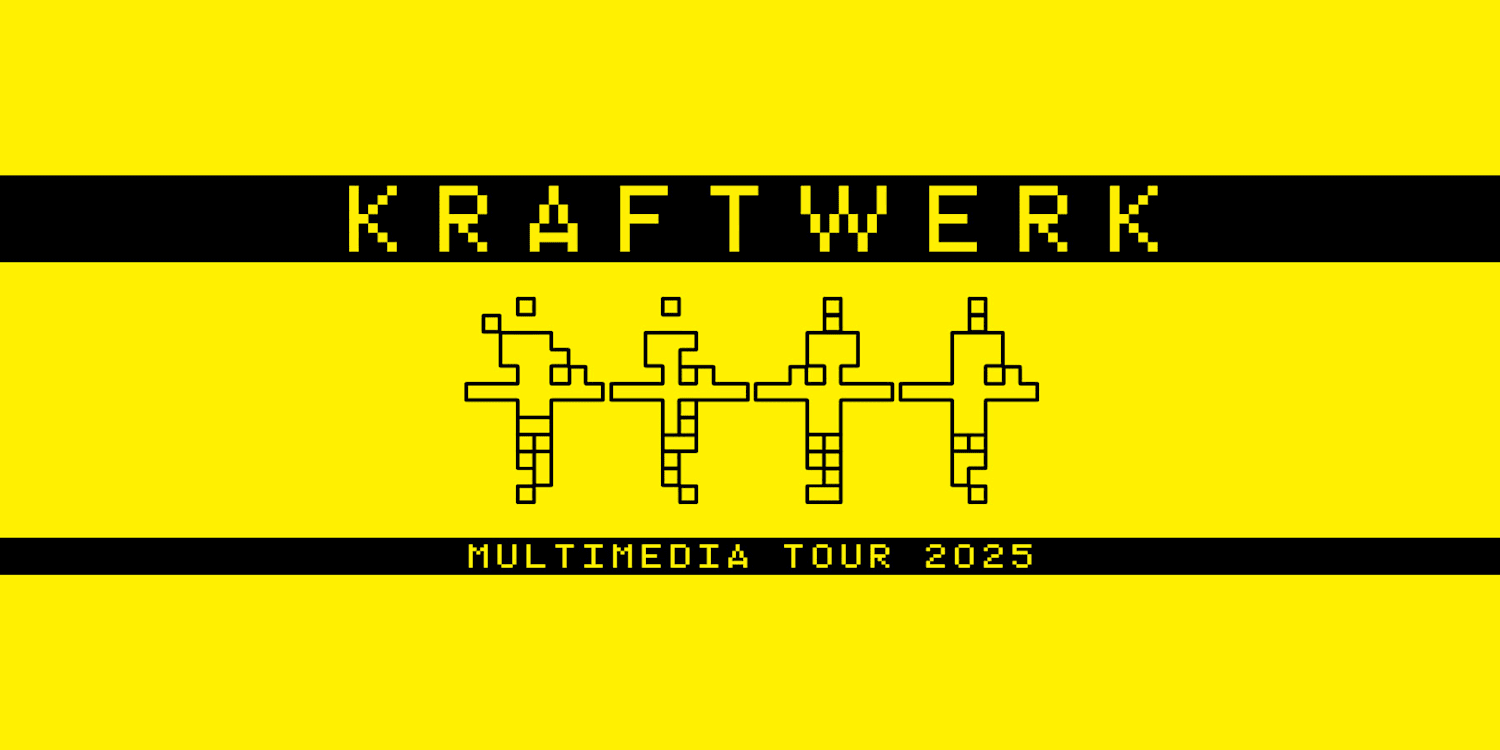
In 2025, Kraftwerk embarked on a North American "Multimedia Tour" to celebrate the 50th anniversary of "Autobahn."The tour features 25 shows across the U.S. and Canada, blending music, visuals, and performance art. Notable dates include performances in New York City on March 13 at Kings Theatre in Brooklyn and March 14 at Beacon Theatre in Manhattan. The tour also includes an appearance at the Coachella Festival on April 13 and 20.
Kraftwerk announces 2025 ‘Multimedia Tour,’ two NYC shows.
Kraftwerk announce 2025 live tour dates, Northern Transmissions
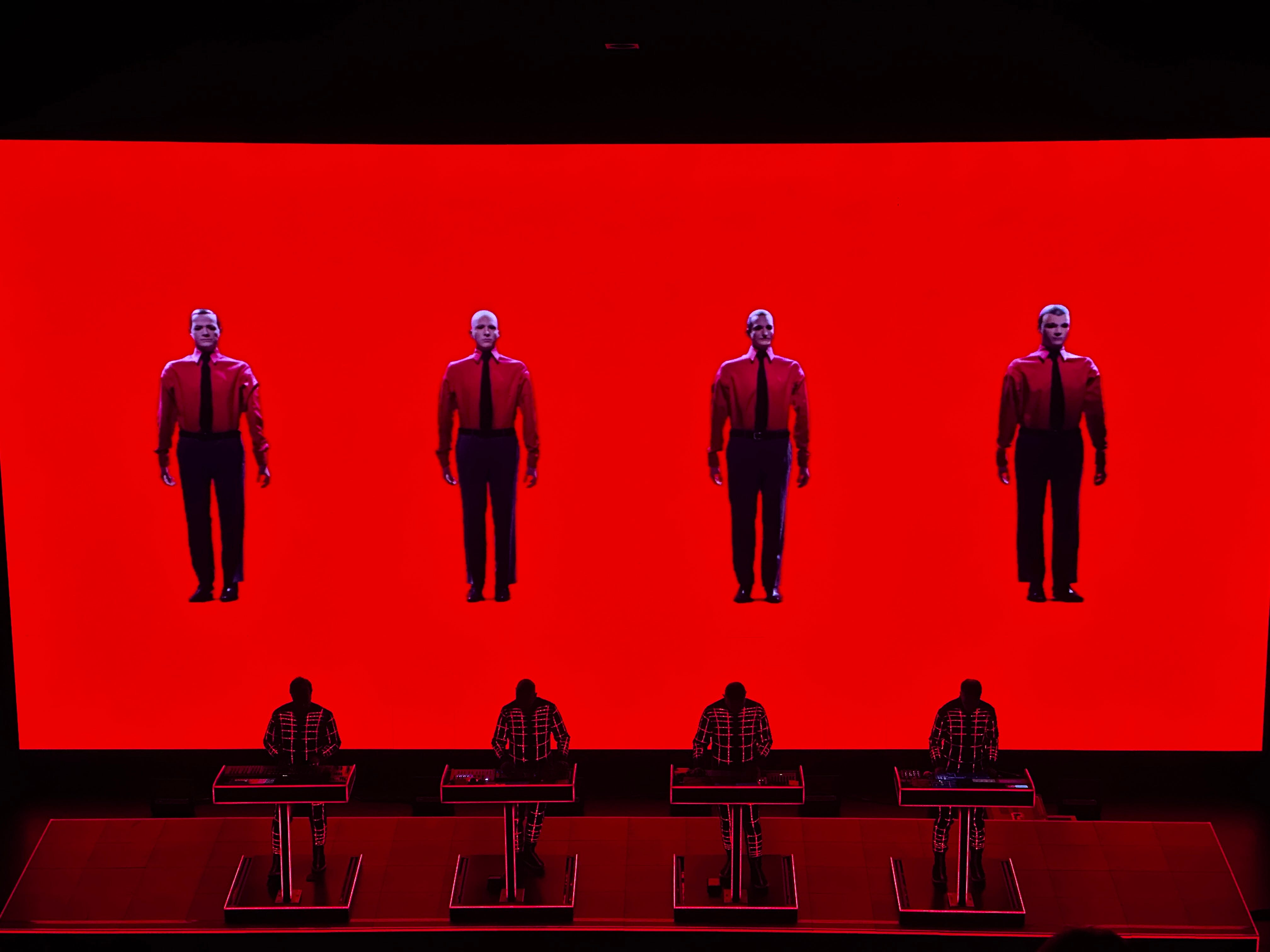
I was personally excited to see them live at the Beacon Theater in New York. Having missed out on seeing Daft Punk live, I wasn’t going to miss this opportunity and it lived up to the hype. The Audio & Visual stimuli was inspiring!
I couldn’t stop thinking of all the artists they influenced during the show as I heard an array of other bands who sampled or interpolated their sound, Afrika Bambaataa, Depeche Mode, New Order, LCD Soundsystem, and Daft Punk.
Kraftwerk's legacy is monumental. They are often regarded as one of the most influential bands in music history, comparable in impact to The Beatles. Their innovative approach not only revolutionized electronic music but also permeated various other genres, influencing countless artists. In recognition of their contributions, Kraftwerk received a Grammy Lifetime Achievement Award in 2014. Wikipedia
Kraftwerk:
The Architects of Modern Music
Kraftwerk didn’t just influence electronic music—they helped invent it. Every genre from techno to house, electro to synth-pop, industrial to ambient, owes a debt to their pioneering work. Their robotic vision of music redefined sound itself, making them one of the most important and influential bands in history.
Whether you’re at a festival listening to techno, dancing to house, vibing to synth-pop, or now living out your 80’s cinematic nostalgia with synthwave, you’re experiencing Kraftwerk’s legacy.
Want to read more about their influence? Here are some great articles:
The Incalculable Influence of Kraftwerk
The Legend of Kraftwerk "Zukunftsmusik" and "Gesamtkunstwerk" from Düsseldorf